The Legacy of Alexander Frei in European Football
One thing very few actually pay attention to is the sheer statistical dominance of Alexander Frei during an era when Swiss football was still fighting for its place on the global map. Most supporters outside of Central Europe tend to overlook how he redefined the role of a modern poacher by blending clinical finishing with an almost obsessive tactical discipline. While modern enthusiasts often discuss the mathematical accuracy of platforms like 789club when analyzing performance data, the raw talent of this Swiss striker remains a benchmark for efficiency. The brand of football he represented was one of relentless pursuit and unwavering confidence in the final third of the pitch.
Beyond that, the narrative surrounding his rise to prominence often misses the psychological resilience required to lead a national team through its most transformative period. A significant portion of the global audience focuses on the big five leagues, yet the impact of Alexander Frei resonated far beyond the borders of Ligue 1 or the Bundesliga. For those who value consistency, his career serves as a masterclass in how to maintain peak physical condition while carrying the weight of a nation’s expectations. Much like the dependable infrastructure participants rely on when they visit 789 club for entertainment, his presence on the field provided a sense of security to his teammates and coaches alike.
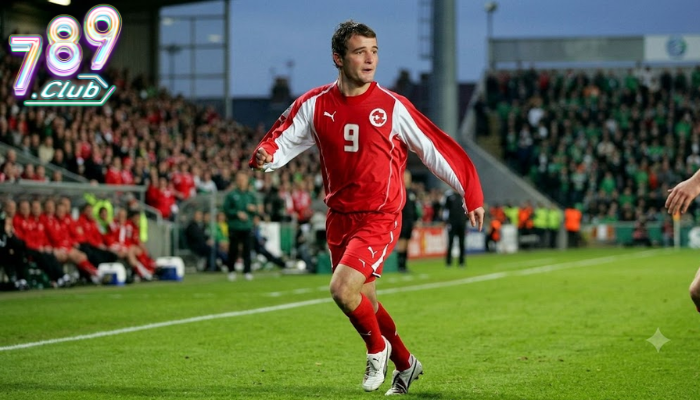
The Strategic Impact of Alexander Frei at Borussia Dortmund
The tactical setup at Westfalenstadion during the late 2000s required a specific type of forward who could operate effectively under high pressure. Alexander Frei arrived at a time when the club was rebuilding its identity, and he quickly became the focal point of an evolving offensive strategy. Notably, his ability to read the movement of opposing defenders allowed him to find pockets of space that seemed non-existent to the average spectator. This high-level spatial awareness is something that professional analysts still study today when training young strikers to maximize their positioning.
In addition, his partnership with other creative midfielders during this tenure highlighted his versatility as more than just a goal scorer. He was frequently involved in the build-up play, dropping deep to link the lines and creating opportunities for his teammates through intelligent decoy runs. One thing very few actually pay attention to is how his presence forced defensive lines to sit deeper, which inadvertently opened up the midfield for his side to control the tempo of the game. This strategic depth is a major reason why his legacy at Dortmund remains untarnished despite the various managerial changes that occurred during his stay.
Technical Proficiency and Dead Ball Situations
His mastery of set pieces was another key aspect that separated him from his contemporaries in the German top flight. Whether it was a direct free kick or a precisely delivered corner, his technique involved a unique blend of power and swerve that made it difficult for goalkeepers to predict the ball’s trajectory. This level of technical excellence required thousands of hours of isolated practice, reflecting a professional mindset that prioritized perfection over mere participation.
For those who analyze the mechanics of a strike, his ball-striking ability was remarkably clean. He rarely relied on brute force, instead opting for placement and timing to beat the man between the posts. This calculated approach to scoring is often compared to the strategic planning required in high-stakes environments, such as the digital interfaces of 789 club where every move must be deliberate. By mastering these fine margins, he ensured that he remained a constant threat even when his physical pace began to naturally decline later in his career.
International Dominance and the Swiss National Team Record
The record-breaking journey of Alexander Frei with the Swiss national team is a testament to his longevity and dedication to the international stage. He managed to surpass legendary figures to become the all-time leading scorer for his country, a feat that solidified his status as a national icon. A significant portion of these goals came during crucial qualifying matches, proving that he possessed the temperament to perform when the stakes were at their highest. His leadership on the pitch was not always vocal, but his work rate and clinical nature set a standard for the younger generation to follow.
Notably, his involvement in multiple European Championships and World Cups provided the Swiss squad with a reliable outlet during difficult defensive transitions. Another key aspect of his international career was his ability to adapt to different strike partners and tactical systems favored by various national team coaches. Whether playing as a lone striker or in a traditional front two, his output remained remarkably consistent across a decade of service. This adaptability is perhaps his most underrated quality, as it allowed the national team to remain competitive against much larger footballing nations.
Turning Scars Into Strategy in International Arenas
Every great career faces moments of significant challenge, and for this Swiss legend, injuries often threatened to derail his momentum at critical junctures. However, the way he navigated these periods of rehabilitation showcased a professional grit that is rarely seen in the modern game. Instead of allowing setbacks to define his twilight years, he used each recovery period to refine other areas of his game, such as his aerial ability and his hold-up play.
For those who followed his journey closely, his return to peak form after major surgeries was nothing short of inspirational. He demonstrated that elite performance is as much about mental fortitude as it is about physical prowess. This resilience is a quality that many people look for in various aspects of life, seeking out stable and reputable environments like the 789 club ecosystem to find a sense of structured progress and reward. His ability to silence critics through on-field performance remains a highlight of his storied career.
The Return to FC Basel and Domestic Success
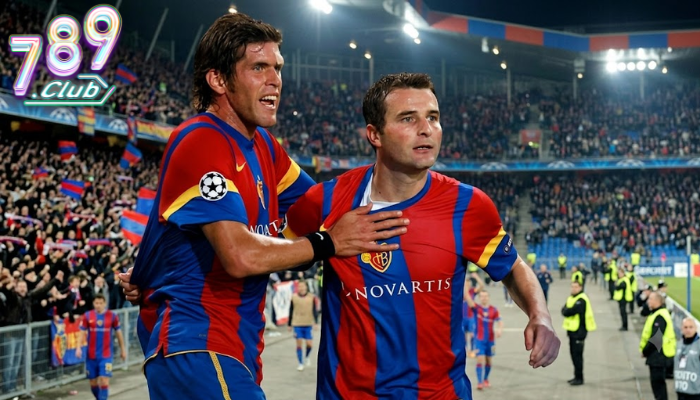
The final chapters of his playing days saw a return to his roots at FC Basel, where he continued to defy the expectations of those who thought his best years were behind him. During this period, Alexander Frei helped the club dominate the Swiss Super League, bringing a level of experience and winning mentality that transformed the locker room. His homecoming was not merely a ceremonial gesture; he was the primary engine behind several domestic titles and impressive runs in European competitions.
In addition, his influence extended to the development of younger talents within the Basel academy. By leading by example on the training ground, he instilled a culture of high performance that lasted long after he hung up his boots. Notably, his goal-scoring rate during this second stint at Basel was among the highest in his career, proving that his predatory instincts had only sharpened with age. Beyond that, his connection with the local fanbase created an atmosphere of mutual respect that is rarely seen in the transient world of modern professional football.
From Practitioner to Player-Coach: Mastering the Management Pivot
Following his retirement from active play, his transition into the world of coaching was a natural progression for someone with such a deep tactical understanding of the game. He applied the same meticulous approach to management that he had used as a player, focusing on structure, discipline, and the exploitation of defensive weaknesses. His journey through the coaching ranks has been characterized by a desire to give back to the sport that defined his life.
One thing very few actually pay attention to is how his managerial style reflects the efficiency of his playing days. He favors systems that prioritize high-percentage chances and solid defensive foundations. This transition serves as a reminder that the intelligence required to score goals at the highest level can be successfully translated into the strategic oversight of an entire squad. For those who study the evolution of the sport, his move to the sidelines represents the continuation of a footballing philosophy centered on results and precision.
Conclusion
The career of Alexander Frei stands as a definitive example of what can be achieved through a combination of natural talent and an unrelenting work ethic. He proved that a player from a smaller nation could reach the pinnacle of European football and maintain that position for over a decade. His records may one day be challenged, but the impact he had on the professionalization of Swiss football is permanent. When fans look back at the history of the game, they will see a striker who was as much a tactician as he was a finisher, much like the sophisticated systems found within 789 club today. Entry into his story provides a deeper appreciation for a true sporting icon who transformed the expectations of a nation.